The Ultimate Guide to Styling Runner Rugs in High-Traffic Spaces
Hallways, entryways, and kitchen galleys are among the most frequently traversed areas in any home, yet they are often the last to receive intentional styling. Runner rugs offer an effortless solution to bridge this design gap. A well-chosen runner not only adds warmth, texture, and visual length to narrow passages, but it also protects your hardwood or tile flooring from daily wear and tear. Whether you are aiming to create a cozy welcome at the front door or bring character to a bright kitchen, styling a runner rug requires a thoughtful balance of size, material, and surrounding decor.
Finding the Right Dimensions for Hallways and Entryways
The most common mistake when choosing a runner rug is selecting a size that overwhelms or underwhelms the space. A runner should define a walkway, not cover it entirely like wall-to-wall carpeting.
The Golden Rule of Margins
When measuring your hallway, aim to leave between four and six inches of exposed floor space on either side of the rug. This creates a framed look that visually expands the corridor. If your hallway features beautiful hardwood or natural stone, showing off those edges grounds the room and keeps the runner from feeling cramped.
Handling Length and Doors
Your runner should ideally span the majority of the hallway, ending shortly before doorways or intersecting rooms. Ensure that door swings have enough clearance over the rug pile. If you have low-clearance doors, opt for a flat-woven wool or low-pile cotton runner to prevent catch points.
Transforming Kitchens with Functional Runner Rugs
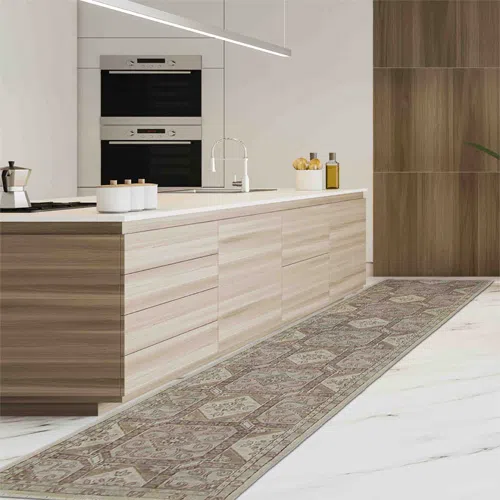
In recent years, kitchen runners have become a hallmark of thoughtful interior design. Positioned along a galley aisle or in front of the primary sink and prep zone, a runner provides soft cushion underfoot while cooking and instantly breaks up the cold expanse of cabinetry and tile.
Choosing Materials for High-Spill Zones
Kitchens demand durability. Look for runners crafted from resilient wool, flat-weave cotton, or durable synthetic blends that handle spot cleaning with ease. Wool is naturally stain-resistant due to its inherent oils, making vintage or traditional patterned wool runners a surprisingly practical choice for kitchen floors. Busy patterns, such as distressed medallions or tribal motifs, are excellent at disguising minor spills and everyday dust between cleans.
Selecting Patterns: From Vintage Warmth to Modern Minimalist
When selecting a runner, consider the mood you wish to establish. Narrow spaces often lack natural light, making color and pattern choices crucial for setting the tone.
Adding Character with Traditional and Vintage Weaves
Rugs featuring intricate geometric motifs, rich crimson tones, or muted antique washes add instant warmth and history to modern or transitional homes. Traditional Anatolian or Caucasian-inspired patterns act as artwork for your floor, turning a plain white hallway into a gallery-like passage.
Opening Up Spaces with Subtle Tones
If your goal is to make a compact area feel airy and expansive, opt for soft neutral shades, subtle herringbone weaves, or delicate linear motifs. Soft beige, cream, and washed blue tones reflect light, giving narrow corridors a more open, breathable quality.
Harmonizing Rugs with Natural Linen Accents
To pull a room together seamlessly, connect the tones in your floor runner with nearby textiles. This is where natural linen shines as a complementary element.
- Kitchen Styling: Pair a vibrant wool runner with textured linen tea towels draped over the sink or oven handle. The earthy, soft finish of linen softens the rich colors of the rug.
- Entryway Harmony: Complement an entryway runner with lightweight linen curtains or a linen-upholstered bench topped with woven throw pillows.
- Dining Adjacencies: If your runner leads into an open-plan dining space, coordinate its accent colors with a relaxed linen tablecloth or table runner to create visual continuity throughout the home.
Essential Safety and Maintenance Tips
High-traffic zones demand extra stability to ensure your home remains safe and stylish.
Always Use a High-Quality Rug Pad
Never skip the rug pad. A non-slip felt or rubber pad keeps the runner firmly anchored, preventing dangerous bunched-up fabric or slipping. Additionally, a quality pad adds extra cushioning and prevents the rug fibers from grinding against hard flooring beneath, extending the lifespan of your floor covering.
Regular Cleaning Routines
Rotate your runner rug every six months to distribute foot traffic and sun exposure evenly. Vacuum regularly using a suction-only setting or turning off the beater bar, especially for delicate vintage weave or fringe detailing. For immediate spills, blot immediately with a dry cloth—never rub—to lift liquids before they set into the fibers.
A runner rug does more than protect your floors; it serves as an artistic anchor that guides movement and brings soul to the functional corridors of your home.
Bringing It All Together
Styling runner rugs is one of the most impactful, accessible ways to elevate your interior design. By measuring accurately, selecting hard-wearing materials for active zones, and tying colors together with organic linen accessories, you create a cohesive and welcoming atmosphere in every corner of your living space.