How to Style Round Rugs in Open-Concept Spaces
Bringing Softness and Structure to Open Interiors
Open-concept floor plans offer incredible natural light, airy ambiance, and effortless flow, but they also present unique decorating challenges. Without physical walls to separate functional areas, large open spaces can sometimes feel cold, acoustics can grow harsh, and layouts can turn visually monotonous due to an abundance of straight lines and sharp angles. Enter the round rug—a versatile design element that breaks up rigid geometry, creates intimate functional zones, and injects organic warmth into modern homes.
1. Breaking Up Linear Boxiness
Most modern interiors are dominated by right angles: rectangular coffee tables, square sofas, linear kitchen islands, and straight walls. Adding a round rug introduces an eye-catching geometric contrast. The curved perimeter acts as a visual break, guiding the eye smoothly through the room rather than along harsh corners.
When placed strategically beneath key furniture arrangements, a round rug instantly softens surrounding architectural hard lines, making open living areas feel welcoming, relaxed, and cohesive.
2. Defining Functional Zones Without Walls
In a multi-use living space, defining distinct areas is essential for building a sense of order. A round rug serves as an anchor point that pulls the eye inward, establishing a dedicated zone for dining, reading, or conversation.
The Breakfast Nook or Dining Area
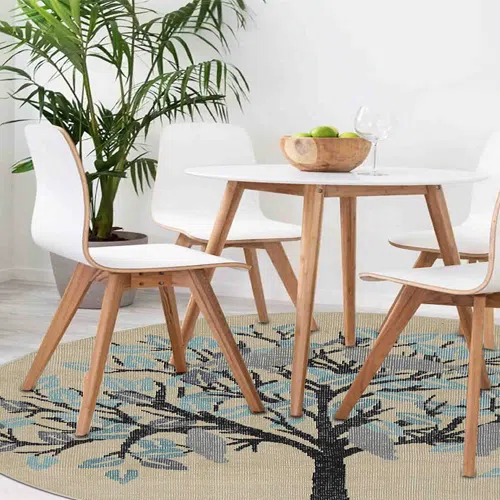
Pairing a round dining table with a round rug is one of the most harmonious design choices you can make. The concentric shapes create an effortless sense of symmetry. To keep the space functional, ensure the rug extends 24 to 30 inches beyond the edge of the tabletop so chair legs remain on the rug even when guests pull them out.
The Cozy Reading Corner
An underutilized corner in a living room or bedroom can easily be transformed into a personal sanctuary. Position a medium-sized round rug in the corner, place a comfortable accent chair and a small side table on top, and frame the nearest window with flowing natural linen curtains. The rug visually separates the seating area from the rest of the room, turning a blank space into a purpose-driven nook.
3. Layering Round Rugs for Added Texture
If you want to create a rich, editorial look, round rugs excel at layering. Placing a textured round rug partially underneath a larger rectangular rug or a sleek minimalist sofa creates dynamic visual depth. The subtle overlap breaks up expansive floor surfaces and highlights central decorative features like an artisanal coffee table or a relaxed linen ottoman.
4. Selecting the Best Materials for Your Home
Choosing the right fiber ensures your round rug performs beautifully while adding the tactile comfort your home deserves:
- Wool: Offers luxurious softness underfoot, excellent durability, and natural stain resistance—ideal for family rooms and primary seating areas.
- Flatweave Cotton or Handwoven Kilim: Lightweight, low-profile, and durable, making them ideal options for entryways or under dining chairs.
- Natural Jute or Sisal: Delivers rich texture and earthy tones that pair exceptionally well with casual linen drapery and soft upholstery.
Design Tip: Pair natural fiber round rugs with light, breathable linen textiles throughout the room. The contrast between plush floor weaves and airy linen drapery creates an inviting, balanced atmosphere.
Essential Sizing Guidelines
Avoid selecting a round rug that is too small for your furniture, as an undersized rug can make a room feel disconnected. In a seating area, aim to have at least the front legs of key chairs resting on the rug. In entryways or foyers, choose a diameter that leaves a balanced border of bare floor visible around the perimeter to frame the space beautifully.
By thoughtfully integrating round rugs into your layout, you can easily balance structured modern architecture with fluid, organic warmth.